
Working in a call center today is already fast-paced. But 2026? It’s going to move even faster.
Customers aren’t just calling to ask for updates—they’re chatting, messaging, emailing, jumping between platforms. And every single one expects answers, empathy, and no wasted time.
So here’s the question: are your call center teams ready for what’s coming?
The truth is, the best tools and scripts won’t help much if your team doesn’t have the right skills. And we’re not just talking about “being polite on the phone.” We mean the real stuff—the human skills that make or break a customer’s experience.
Let’s walk through what every call center agent needs to bring to the table in 2026 (and beyond).
1. Talk Like a Human, Not a Script
No one wants to hear “We apologize for the inconvenience” for the hundredth time. People want to talk to real people.
That means:
- Listening without interrupting
- Speaking like you’d explain something to a friend
- Showing genuine care (not copy-paste sympathy)
Empathy isn’t just a buzzword. It’s the one thing that makes all the difference when someone’s frustrated or confused.
2. Know Your Way Around the Tech
Let’s not sugarcoat it: the tech isn’t getting simpler.
Agents in the best call centers will be flipping between CRM systems, AI tools, chat dashboards, and email—all before lunch. If that sounds like a lot, that’s because it is.
But it’s manageable when agents:
- Get hands-on with the tools
- Stay calm when things glitch
- Stay curious about updates instead of avoiding them
And at Call Center Doctors Academy, digital comfort isn’t optional—it’s part of the foundation.
3. Stay Cool When Things Get Messy
Not every issue is in the manual. Sometimes, a call goes sideways. Systems crash. A customer is clearly over it before they even say hello.
This is where quick thinking comes in.
Solid call center agents know how to:
- Slow things down
- Ask the right questions
- Find a solution—or a creative workaround—fast
And they do it without passing the blame or sending the caller in circles.
4. Speak Clearly, No Jargon
Customers shouldn’t need a dictionary to understand your answer.
The best agents break things down in a way that’s simple, friendly, and clear. No jargon. No robotic tone. Just plain language that gets the job done.
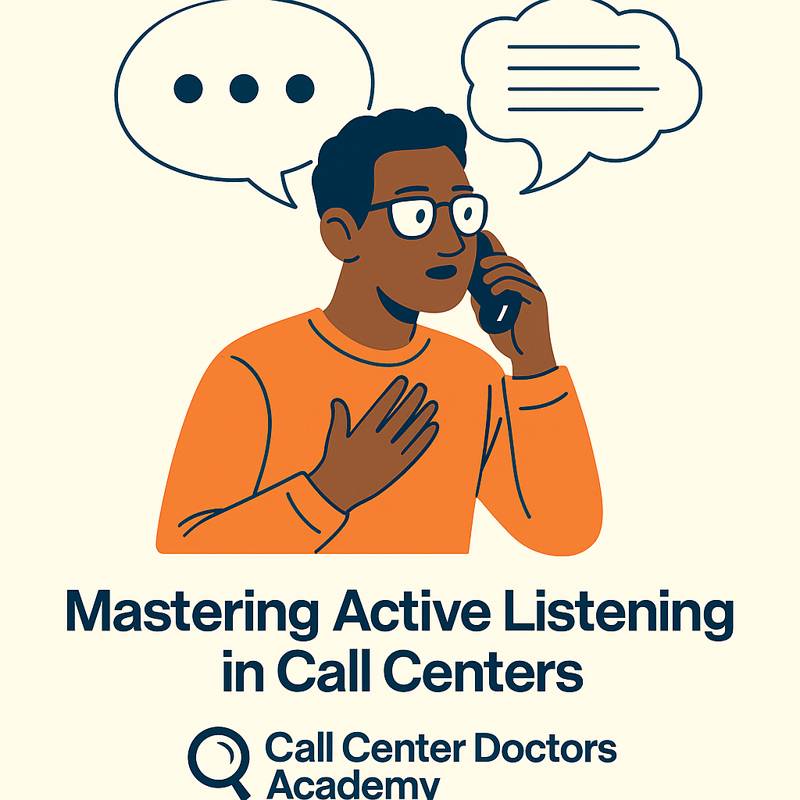
5. Actually Listen
This one feels basic—but it’s huge.
When someone calls in, they don’t want to repeat themselves. They don’t want to feel like they’re being rushed. They just want to feel heard.
Active listening means:
- Letting them finish
- Picking up on the real problem, not just what’s on the surface
- Confirming you understood before jumping to fix
It’s simple—but it’s powerful.
6. Be Ready for Change (Because It’s Constant)
New tools. New procedures. New challenges. The only thing guaranteed in 2026 is change.
The strongest call center teams will be made up of people who don’t freak out when something shifts. They’ll roll with it. Ask questions. Adjust fast.
Adaptability isn’t about being perfect—it’s about staying steady when things move.
7. Handle the Clock Without Rushing the Person
Support is all about balance. You can’t spend 20 minutes on every call—but you also can’t make people feel like a ticket number.
Great agents learn how to:
- Keep conversations focused
- Avoid dragging things out
- Still make each person feel like they mattered
That’s a skill. And it takes practice.
8. Actually Know What You’re Talking About
You don’t need to be an engineer. But you do need to know your product or service inside and out.
Why? Because nothing frustrates a customer more than feeling like they know more than the person helping them.
Strong agents:
- Stay updated
- Ask questions when they’re unsure
- Learn how to explain things in normal language
Confidence comes from knowing your stuff. That confidence builds trust.
9. Respect Where People Come From
You’re not just talking to one type of customer anymore. You’re dealing with people from different cultures, languages, and backgrounds—sometimes all in the same hour.
That means:
- Adjusting your tone and language
- Being mindful of how you phrase things
- Treating every caller with basic human respect
The best call centers build this into their culture—and it shows.
10. Keep Growing, Even on the Hard Days
Let’s be honest—some days are rough. Calls pile up. Customers are on edge. You feel drained.
But the best agents don’t check out. They check in—with themselves, with their leads, with their own growth.
At Call Center Doctors Academy, growth isn’t a one-time training session. It’s ongoing. It’s baked into how we build support teams that last. Because when people keep learning, they stay engaged. And that energy spreads.
The Bottom Line
Call center work in 2026 isn’t about who can talk the fastest or close the most tickets. It’s about who can connect with people—even through a screen. It’s about showing up calm, curious, and ready to help.
The tech will keep changing. The channels will keep multiplying. But the heart of it stays the same: people helping people.
And if you want your team to be part of the future of support? Build these skills. Make space for growth. Train like it matters—because it does.Call Center Doctors Academy: Your Learning Hub for Contact Center Excellence is here for the teams who want to do it right. No fluff, no filler—just the real stuff that makes agents great.