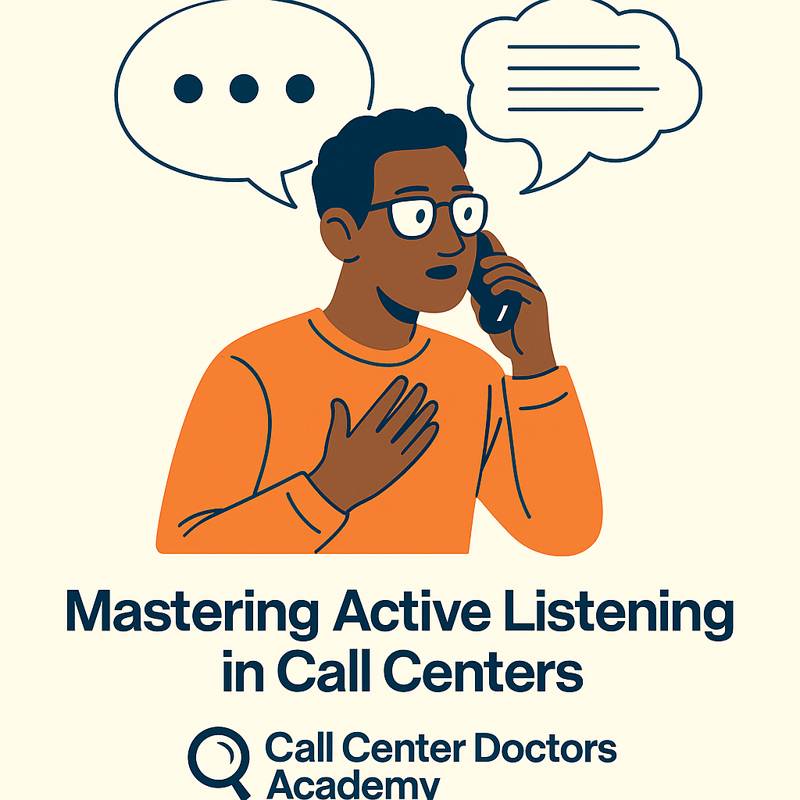

Let’s be real — when your job is talking to people all day, listening isn’t just a nice-to-have. It’s the whole deal.
In Call Center Services, where the pace is fast and emotions run high, the way you listen can completely change how a call goes. It’s the difference between a stressful back-and-forth and a quick, clear resolution that leaves the customer thinking, “Wow, that actually went better than I expected.”
Because let’s face it: most people aren’t calling just to chat or say thanks. They’re calling because something went wrong. They’re upset, they’re in a hurry, or they’ve already explained the issue to two other agents. And in that moment, what they need most is someone who’s really there — someone who’s listening.
At Call Center Doctors Academy — your learning hub for contact center excellence — we see it every day. Agents who take listening seriously don’t just solve problems faster. They build trust, they calm people down, and they leave a lasting, positive impression.
So let’s walk through what active listening really means — and how you can start doing more of it on your next call.
What Active Listening Actually Looks Like
Active listening isn’t just tossing out a few “uh-huhs” while the customer talks.
It’s about being fully in the moment — not half-distracted, not waiting for your turn to speak. You’re paying attention to what the customer says, how they say it, and what they might not be saying out loud.
It’s when you respond with empathy and clarity. You show that you understand, and you’re ready to help — not just because it’s your job, but because you care about getting it right.
Why Listening Is Such a Big Deal in Call Center Services
If you’ve worked in a Contact Call Center, you already know how it goes: the phones don’t stop ringing, systems crash at the worst times, and customers aren’t always patient.
In the middle of all that, it’s easy to go on autopilot. You’re reading the script, flipping through tabs, thinking about your after-shift plans… but if you’re not fully tuned in, it shows.
Customers know when you’re not really listening. And that’s when things go south.
On the other hand, when you’re focused, calm, and fully present, you can turn even a difficult call into a win. That’s why active listening isn’t just good for the customer — it makes your job easier too.
8 Active Listening Tips You Can Use Right Now
You don’t need to change who you are to be a great listener. These small habits make a big difference.
1. Shut Out the Noise
Mentally and literally. Close extra tabs. Stop checking Slack. Forget about the queue for a minute. Give your full attention to the caller. They’ll notice — and appreciate it.
2. Use Natural Check-Ins
You don’t have to say a ton to show you’re listening — just drop in a few genuine responses here and there. Stuff like:
“Totally get that.”
“Yeah, that’d be frustrating.”
“Thanks for breaking that down.”
It’s not about checking a box — it’s about sounding like a real person who’s paying attention.
3. Let Them Talk It Out
Even if you already know where the conversation’s going — let them finish. Cutting people off, even with good intentions, can come across like you’re rushing them. Just hang back, let them get it out, then jump in once they’re done.
You might catch something important you would’ve missed by jumping in too soon.
4. Repeat It Back — In Your Own Words
Want to show a customer you were actually paying attention? Just give them a quick recap in your own words. Something like:
“Alright, so just to make sure I’ve got this — you were charged twice and haven’t been able to get through to anyone yet?”
It’s a simple move, but it tells them you’re on the same page. And if you got anything wrong, they’ll let you know right away — which saves time and clears up confusion early.
5. Ask Questions That Actually Help
Forget the script for a second and focus on the issue. Instead of leading with “Can I get your account number?”, try questions that dig a little deeper:
- “When did this first start happening?”
- “Has anything like this happened before?”
- “What would feel like a good solution to you?”
These kinds of questions help the customer open up and help you understand what they really need — not just what it sounds like on the surface.
6. Match Their Tone — Not Their Mood
If a caller’s angry, don’t go full customer-service-robot or overly cheerful. That just makes things worse. Stay calm. Keep your voice steady. Let them know you’re taking them seriously.
And if they’re laid back or even joking a little? It’s totally okay to loosen up — just keep it respectful and professional. Meet people where they’re at, and you’ll build trust way faster.
7. Multitask Without Checking Out
You’ve got to take notes. That’s part of the job. Just don’t let it pull you out of the moment. If you’re typing while they’re talking, make sure you circle back to confirm what you heard.
8. Wrap It Up the Right Way
Before ending the call, take a moment to clearly explain what’s been done, what happens next, and thank them for hanging in there:
“Alright, I’ve submitted your refund. It should show up within 3–5 business days. If it doesn’t, call us back and we’ll make it right. Thanks again for being patient — I really appreciate it.”
It only takes 10 seconds, but it leaves a lasting impression.
Common Listening Mistakes to Avoid
- No shame — we all slip into bad habits sometimes. Just try to steer clear of these:
- Sounding too scripted – Customers can tell. Be yourself, not a robot.
- Rushing the call – Fast isn’t better if the caller feels ignored.
- Guessing instead of asking – Clarify when needed. Don’t assume.
- Treating every caller the same – Each person is different. Meet them where they are.
- Listening Is a Team Skill, Not Just a Personal One
When your whole team commits to better listening, everything improves. Calls are smoother, customers are happier, and the overall vibe in the center is just better.
At Call Center Doctors Academy, we push this not because it’s trendy — but because it works. Listening helps prevent issues before they even become problems.
Getting Better Takes Practice (But It’s Worth It)
No one becomes a top-tier listener overnight. It’s a skill like anything else — and you get better by using it.
Here are a few ways to build it:
- Listen to your own call recordings. Be honest with yourself.
- Ask teammates for feedback.
- Roleplay tough scenarios and practice slowing down.
- Try active listening outside of work, too — friends, family, anyone.
- The more you do it, the more natural it becomes.
Final Thoughts
If you’re working in Call Center Services, active listening might be your biggest asset. It doesn’t cost anything. It doesn’t add to your call time. But it can change everything.
You’ll solve problems faster. You’ll get fewer repeat calls. You’ll feel less drained at the end of your shift.
And the people on the other end of the line? They’ll feel like they talked to someone who actually heard them.
Whether you’re just starting out or you’ve taken hundreds of calls, there’s always room to grow. And if you’re looking for real-world support to sharpen your skills, Call Center Doctors Academy is here — your go-to learning hub for Contact Call Center excellence.
Because when it comes down to it, most customers just want one simple thing: to feel heard.
And you have the power to give them that.